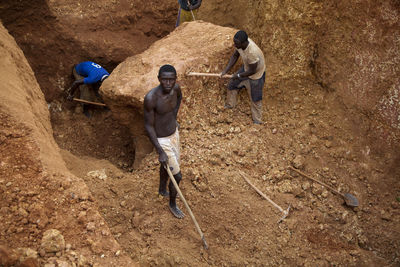
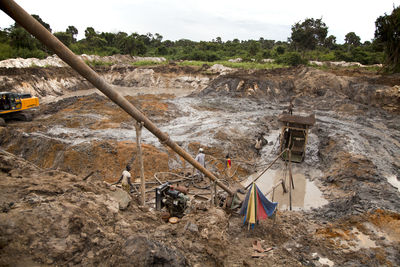
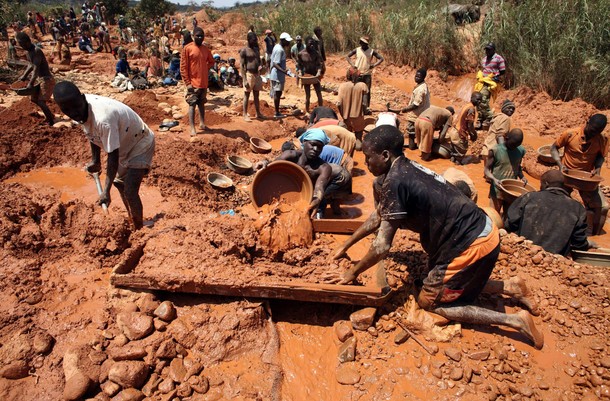
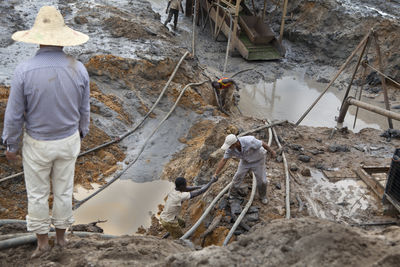
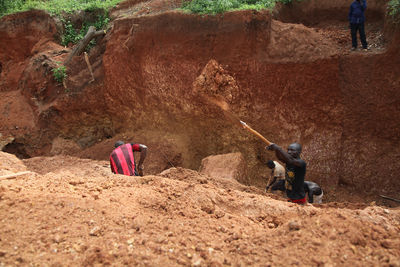
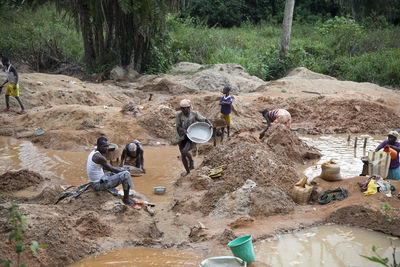
Colomine Small Scale Gold Mining Project
Colomine Gold Mine, in eastern Cameroon, poured first gold in December 2012, becoming Secam Local Miner’s first operation. Secam Local Miner Commercial Production at Secam Local Miner in March 2015.
In September 2023, Secam Local Miner extended Colomine’s operational life to 18+ years (to at least 2040). Colomine is expected to produce ~7,000oz gold per year over the next five years of its mine life (to 2029) at an average AISC of ~US$1,104.
There is potential for Secam Local Miner to further extend Colomine’s mine life through additional discoveries adjacent to existing infrastructure and further resource definition drilling of known deposits, including the Colomine open pit and CMA underground structure.
Development of Colomine started in May 2012 and progressed on time and on budget allowing Secam Local Miner achieved a stretch target of pouring first gold at Colomne in December 2014.
Since 2014, ore at Colomine has primarily been mined from the CMA open pit, with some contributions from minor satellite pits. CMA open pit stage 2 and stage 3 cutbacks are due to be completed during FY24 and FY25 financial years respectively, where after mining will move on to satellite pits and the recently expanded Colomine open pit.
Secam Local Miner completed a CMA UG feasibility study in August 2023, proving the technical and economic viability of underground mining of the CMA orebody, down dip and down plunge of the stage 3 CMA open pit.
Secam Local Miner will advance work on CMA Underground in CY2025 – its first underground development after a positive Final Investment Decision in January 2025. First portal development is expected by Q1 FY26.
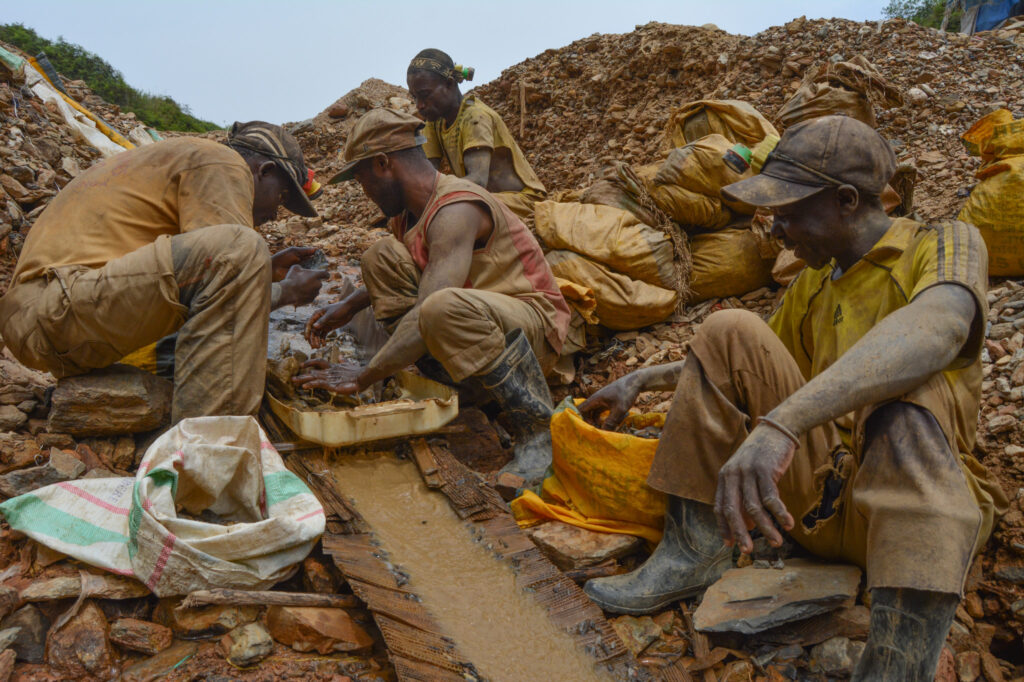
Geology
Colomine (or Kolomine) is a gold mining village in Cameroon located in the East region and the Lom -et-Djérem department . It is part of the district commune of Ngoura . It is a traditional chiefdom of the 3rd degree . The belt is a north-north-east-trending assemblage of Palaeoproterozoic volcanic, sedimentary and intrusive rocks of the Birimian Supergroup.
Gold mineralisation at the Colomine has been subdivided into two main zones: the CMA Zone and the Colomine Zone.
The CMA zone is a relatively continuous 20-45m thick fault zone featuring quartz-carbonate (dominantly ankerite) veining and disseminated pyrite in albite-carbonate altered metabasalt wall rocks. It strikes approximately north-south, dips at 30 degrees to the east, extends along 1,200 metres strike and its down-dip continuity has been tested for in excess of 450m.
The Colomine Zone comprises a system of structures in a 300m wide zone, 200m stratigraphically below the CMA Zone and beneath the Colomine Cen-tral Pit. Gold mineralisation is hosted by a series of brittle-ductile structures divided for convenience into ‘Y’ and ‘S’ types. The ‘Y’ fault zones, parallel to CMA, consist of Y1, Y2 and Y3 – shallow easterly dipping reverse faults with associated albite, carbonate and quartz veins in variably altered host rocks with disseminated pyrite. The ‘S’ type structures comprise sub-vertical faults filled with quartz-tourmaline veins. The ‘S’ type structures are oriented southwest-northeast and northeast-southwest. Mineralisation in the Colomine Zone is hosted by metabasalts and by a north-south trending granodiorite intrusive body.
Workforce & Community
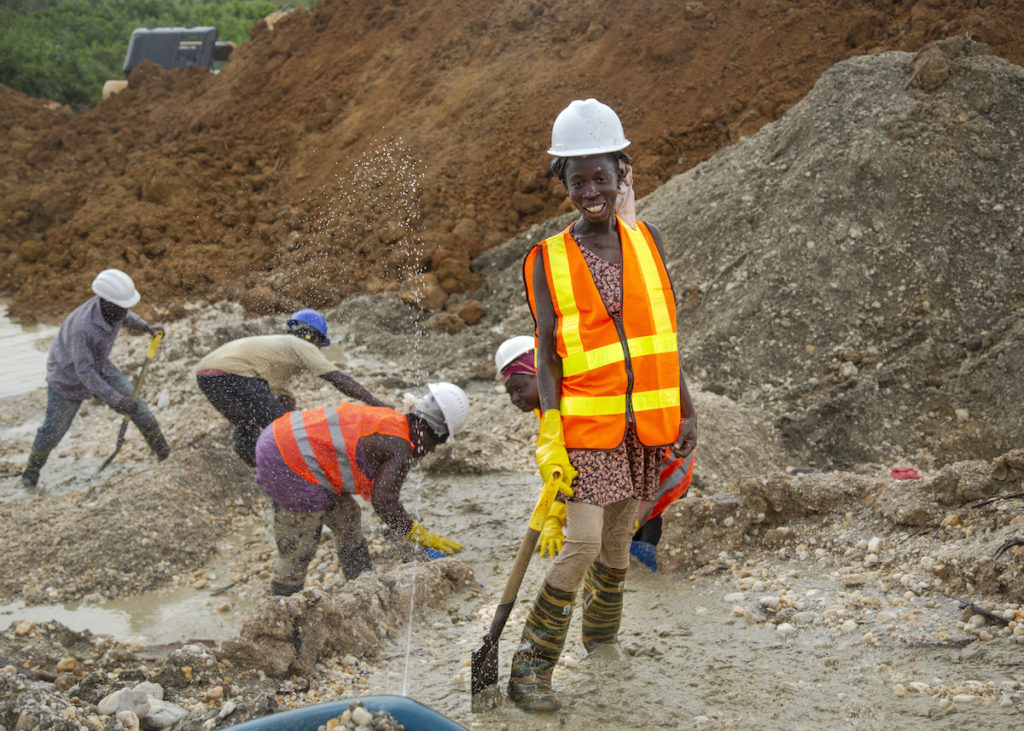
We employ more than 1,200 employees and contractors at Colomine Gold Mine. About 93% of our workforce are Cameroonian nationals and 48% are drawn from the villages nearest the mine.
Secam Local Miners implemented a similar community engagement model at Colomine to that successfully employed at Sissingué. As required under Cameroonian law, 0.5% of the revenue generated by Colomine is paid into a Community Development Fund, from which a range of community determined, infrastructure and livelihood development projects are funded.